

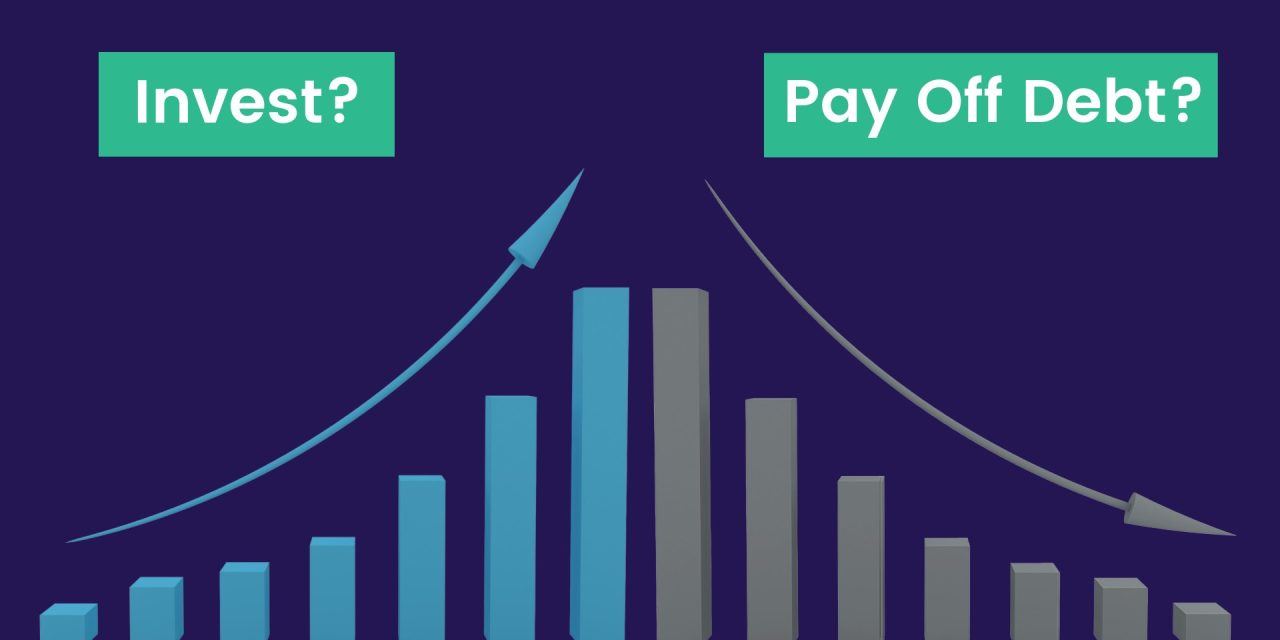

The personal finance journey varies for different people. We do not always receive our awakening when we are in the best financial positions. In fact, many will agree that their realisation was born out of a poor financial situation that they could not stand anymore. So you start reading and learning about personal finances. You get your mind filled with ideas about saving and investing; however, a mountain of debt is staring you in the face. The trouble for many is, do you start investing in building some financial muscle, or do you start by paying off debt?
Debt
Debt isn’t always a straightforward subject. This is because of the many different types of debt and the many ways people end up in debt. For the purposes of simplicity, we will acknowledge that debt occurs because, at some point, your outgoings outweighed your available cash. So whether you wound up in debt because you had the best intentions and things didn’t work out the way you thought they would, or you were less than responsible with your expenditure, the sum is the same, you owe money.

Investment
Investment is the process of putting money into a product, object or mechanism from which you expect a financial gain in return. Investment can be short-term, long term or anything in between. Ultimately investing is about keeping money and putting that money to work. Investment is a means of multiplying or growing whatever money you keep. Investment tends to come with some risk, sometimes more than a little bit. So while the goal is to grow your money, there is also a risk of losing it. The upside with investment is it’s your money, and you can do whatever you want with the proceeds of the investment. Though some uses are better than others.

So here we have two opposing forces. One arising from a lack of money and another an opportunity to have the money you so desperately lacked. Now we can deal with our question, should you pay off debt or invest first? Some factors determine the answer to this.

Interest on debt
Firstly, let’s look at the interest on the debt. There’s a school of thought that says if your investment pays better returns than the rate of interest on the debt, then it is wiser to invest and pay off the debt from the proceeds or returns of the investment. This is good in theory, but earlier, we said that investment involves risk, so there is no certainty of return, whereas the interest on debt is a certainty. So unless the investment is 100% sure to pay back (and it never is), you should probably prioritise repaying the debt.
Type of debt
The type of debt also matters. Or, to be blunter who you owe matters. This is a matter of legal standing more than anything else. Very few institutions, or people for that matter, are willing to write off their debt or sit back while it goes unpaid. The trouble here is that the creditor has a legal claim to your assets. So that investment you make could well go to the creditor you are not paying if things go the legal route.

Do you have an emergency fund
One of the few reasons to argue against paying debt is the absence of an emergency fund. Remember, we are in debt because of a lack of funds, so paying off debt but remaining without funds leaves us prone to going deeper into debt or creating new debt. The emergency fund is not an investment but the foundation of sound investing. However, emergency funds are largely misunderstood in that when people hear “you should have 3-6 months’ worth of expenses saved up”, they think you should do this immediately. The best way to establish an emergency is little by little. Establishing your emergency fund can take 6 months, a year or 3 years. So while you should consider building an emergency fund, it shouldn’t prevent you from making payments on your debt.

Credit rating
Even where debt does not carry interest, its impact on your credit rating still serves as motivation to pay. If you think this excludes debt with friends and family or “off the books” debt, which wouldn’t show up in a credit report or considering the poor state of credit rating in Zimbabwe, you’re dead wrong. Your personal credit rating with someone who helped you get out of trouble is very important, considering that you needed their assistance before. So maintaining good relationships with those that were in a position to assist you suggests that we should pay off those debts.

Usually, when posed with a choice between two good options, the correct answer is both, and this isn’t different. In most cases, debt repayments can be negotiated to a point where they are comfortable. Perhaps enough to accommodate both paying off debt and investing. If this is not possible, it is clear that servicing debt should be prioritised. This way you can exercise your newfound financial literacy with a clean slate and conscience.